
You are inside your apartment looking at the back of your front door, and there are two locks on it. One is a deadbolt you recognize. The other is a small metal case screwed to the face of the door, with a bolt that slides up and down into two rings on the frame. Nobody told you what that second one is, so you are guessing. Is it worth keeping? Do you need both? And in a rental, are you even allowed to touch it? Most of the lock installation and lock change calls we take in apartment buildings start with somebody looking at that exact door.
Neither one is the stronger lock. They resist two different attacks, and on a NYC apartment door most people are best off with one of each.
- A jimmy-proof lock is better against prying, because its rings hook into the frame and pull tighter when the door is pushed away.
- A deadbolt is better against a kick, because a long bolt sits deep in the frame at one point.
- The jimmy-proof lock is the one that fits an old door, since it bolts to the face instead of needing a hole cut through.
- Both are only as good as the frame. Fix a loose frame before you buy either.
Where that comes from: the city code already asks for a deadbolt on the door, and the Multiple Dwelling Law lets you add one lock of your own on top of it.
I am Roye Gvili. I started Top Notch Locksmith & Security in Manhattan in 2010, and my technicians work on apartment doors in all five boroughs. By the end of this you will know what a jimmy-proof lock actually does, how a deadbolt holds the door differently, what I check before I tell somebody which one to put on, what the city lets you add yourself, and whether a break-in is still the thing to worry about in 2026.
Key takeaways
- Ask for the grade, not the style. Both types are graded 1 to 3, and Grade 1 is the one worth paying for.
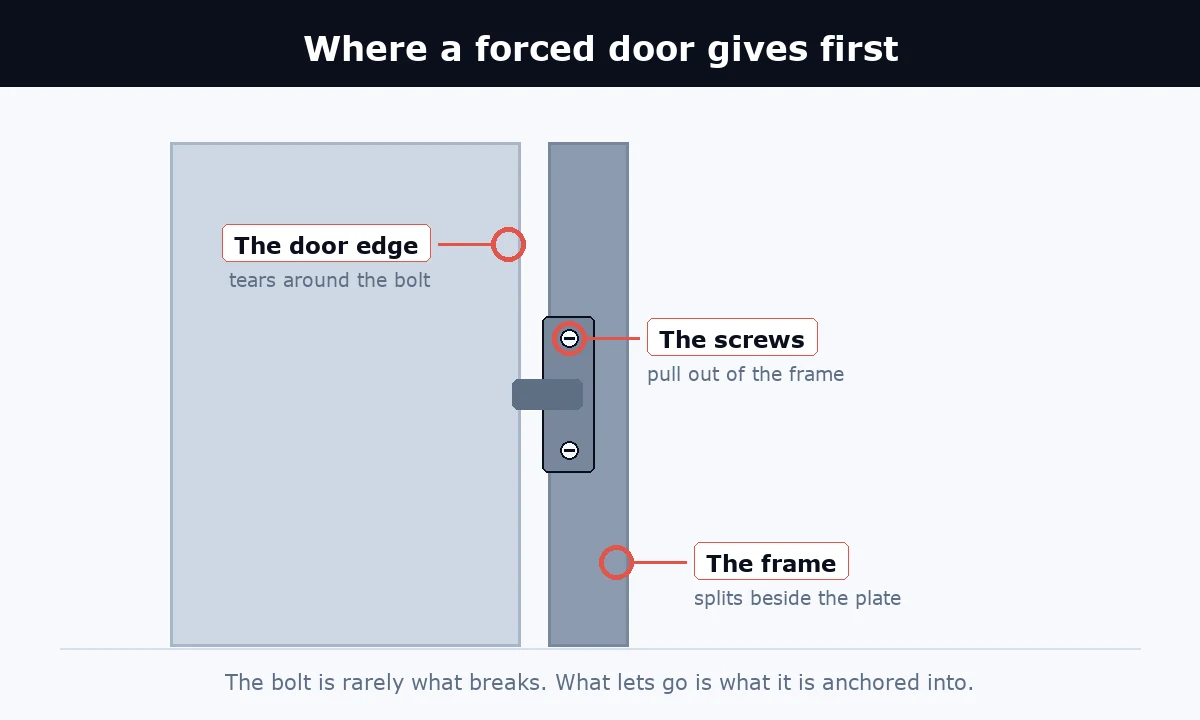
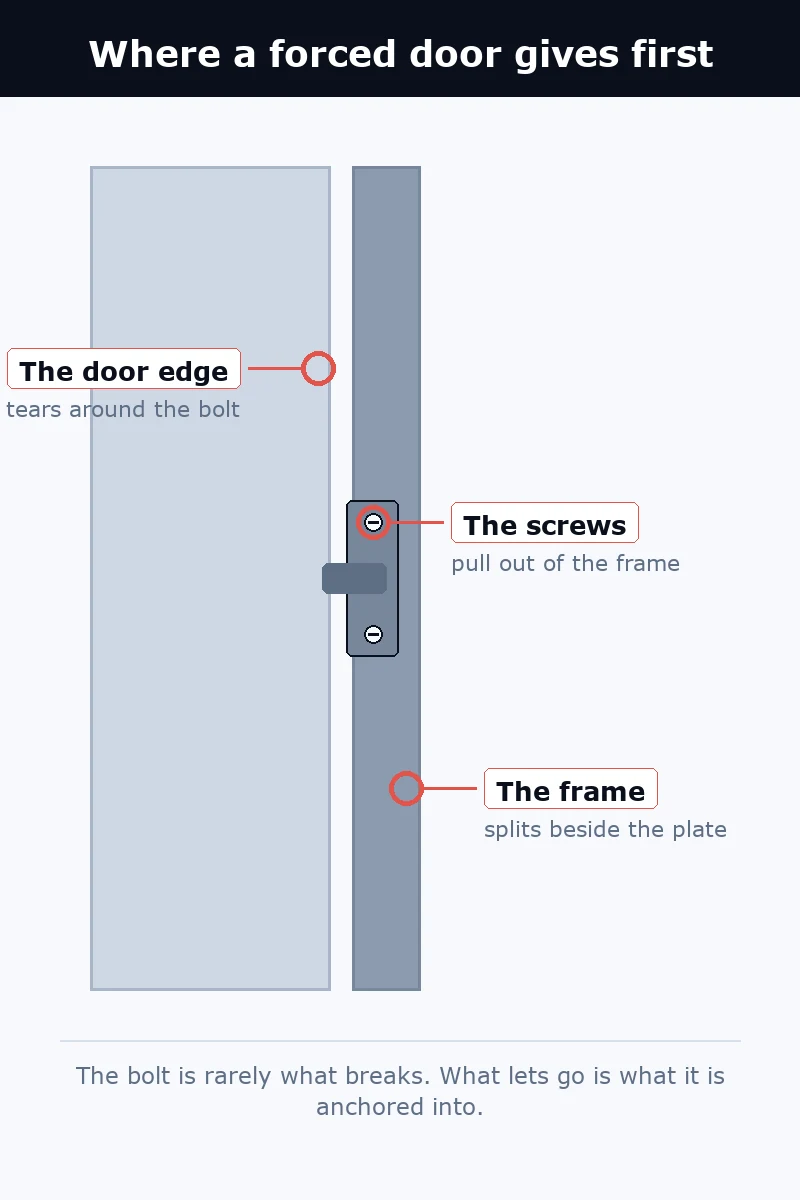
- The frame is what gives first on most forced doors I see, so check the plate and its screws before you shop.
- The city code names what the lock has to do, not which style it is: key from the outside, thumb-turn from the inside.
- Renters may add one lock of their own, and the landlord can ask you for a duplicate key.
- Burglary in New York City fell 14.2 percent in July 2026 against July 2025, so pick a lock on how your door is built, not on fear.
This is general information, not legal advice. It comes from the city code and the standards linked below, and from the apartment doors my team works on. Your lease, your house rules and your building type can change the answer. Read your lease, and ask your managing agent before you change hardware on a door you rent.
What a Jimmy-Proof Lock Actually Is
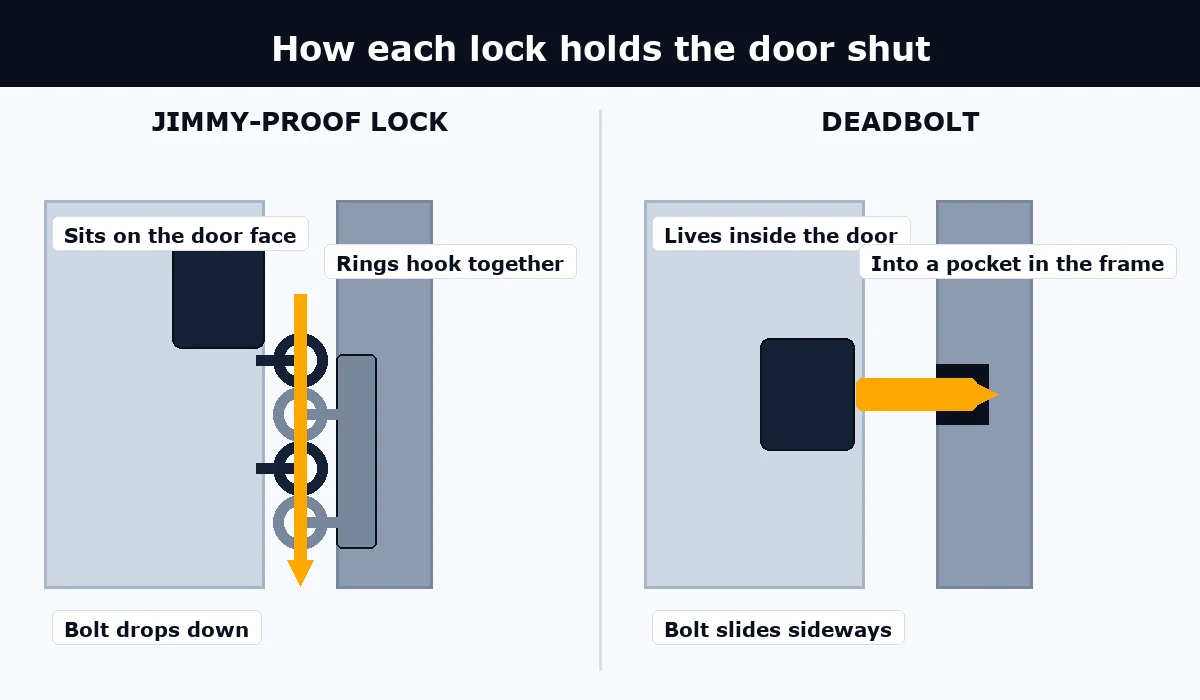
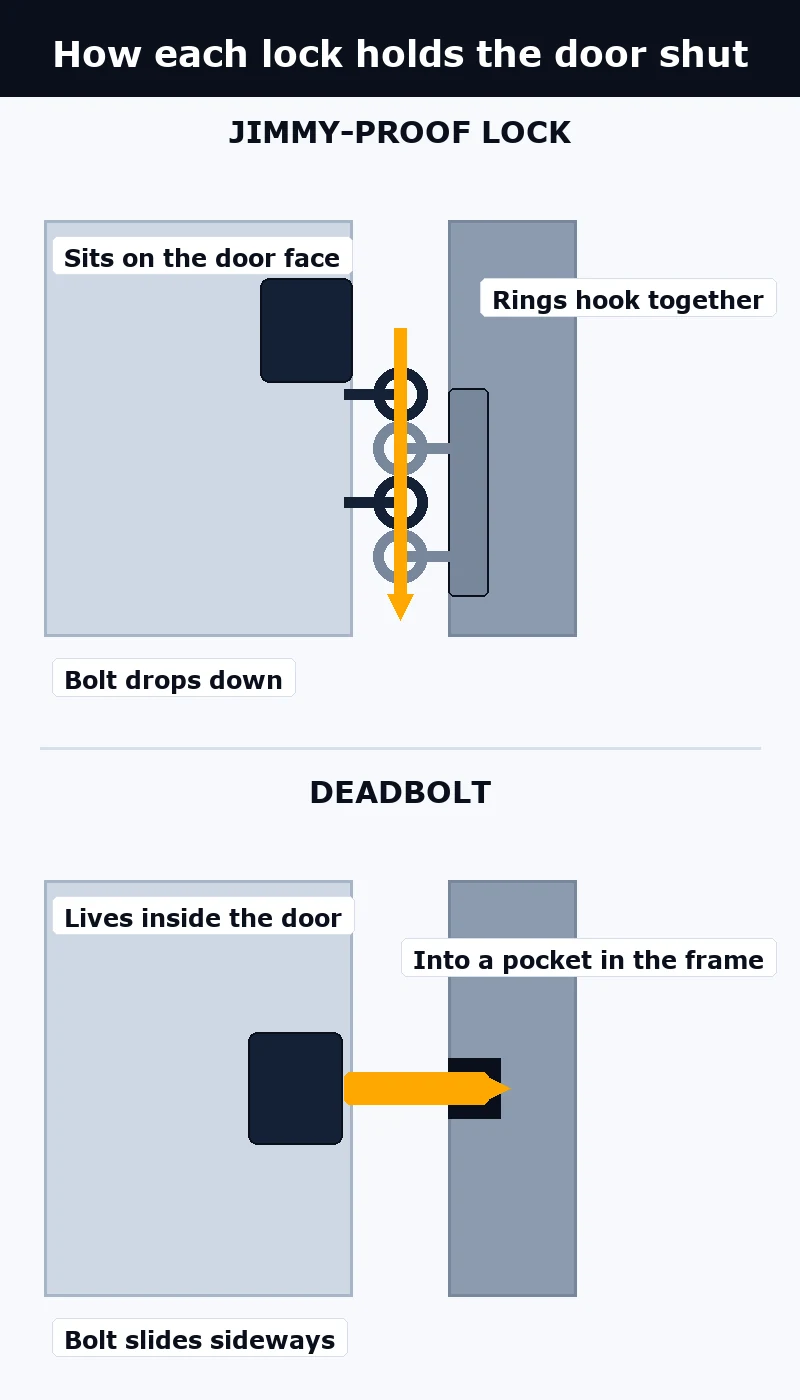
A jimmy-proof lock is a case that sits on the inside face of your door, near the edge. Two rings drop out of the bottom of it and slide into two matching rings on a plate screwed to the frame, and one bolt runs straight down through all four. The rings sit inside each other like the links of a chain.
That interlocking is the whole idea. Someone working a pry bar into the gap is trying to force the door and the frame away from each other, and here that only pulls the rings tighter onto the bolt. Jimmying is the old word for prying a door, which is where the name comes from.
You will hear it called a vertical deadbolt, an interlocking deadbolt, or a Segal lock, after the New York company that made them for decades. Same hardware. From the hallway you open it with a key, while inside you turn a thumb-turn or a knob.
What a Deadbolt Does Differently
A deadbolt lives inside the door instead of on top of it. Turn the key and a solid metal bar slides sideways out of the door edge into a hole in the frame. There is no spring in it, which is what dead means here. It stays where you put it until somebody turns it back.
The trade is what it takes to fit one. A deadbolt needs a large round hole bored through the face of the door and a pocket cut into the door edge. On a solid door that is routine work, while on a thin or hollow apartment door it removes material the door needs. That is why so many prewar New York doors got a surface lock instead.
Ask how far the bolt travels before you buy. An inch into the frame and a half inch are very different locks at the same price.
Side by Side, With the Parts That Actually Differ
These two fail in different places, so the question is which suits your door.
| What you are asking | Jimmy-proof lock | Deadbolt |
|---|---|---|
| Where it mounts | On the inside face of the door, with a small hole for the key | Inside the door, needing a large bored hole and a cut in the edge |
| What it does to an old door | Very little, which is why it suits thin and hollow doors | Removes real material, so a weak door needs checking first |
| What it resists best | Prying the door away from the frame | A hard kick at one point on the door |
| How it opens from inside | Thumb-turn or knob on the case | Thumb-turn, and the city code asks for that on the required one |
| How it is graded | Grade 1, 2 or 3 as an auxiliary lock | Grade 1, 2 or 3, and Grade 1 is the one to ask for |
That last row is the one people skip. Add-on door locks are graded by the Builders Hardware Manufacturers Association under ANSI/BHMA A156.36, the standard for auxiliary locks, on five sets of tests: operational, cycle, strength, security and finish. Makers have to state the grade their product is certified to. So the useful question in a store is not the style on the box. It is the grade.
4 Things I Check Before I Tell You Which Lock to Put On
When somebody asks me this on a job, I am not thinking about the lock first. I am looking at four things around it.
- The door itself. I knock on it. A solid door answers with a dull thud, while a hollow one sounds like a drum. On a hollow or worn door I lean toward the surface lock, because boring a deadbolt hole takes away material it cannot spare.
- How the plate on the frame is anchored. This decides more than the lock does. I check that the plate is tight, that the screws bite into something solid, and whether the frame has been patched before. A strong bolt in a loose plate is going nowhere.
- The gap between the door and the frame. Stand inside with the lights on behind you and look along the edge. A wide, uneven gap gives a pry bar somewhere to start, and it usually means the door has dropped on its hinges. Sometimes the fix is hardware repair and a hinge adjustment, not a new lock.
- Who else needs to say yes. In a rental, a co-op or a condo, the building often has house rules about cylinders and about who holds a key for emergency access. I ask before I drill, because a lock the managing agent makes you take off is money spent twice.
Three of those four are about the door and the frame, not the lock. The hardware is the easy part to change.
What NYC Rules Let You Add to Your Own Door
Two rules matter, and they answer different questions. The first is what has to be on the door already. Section 27-2043 of the New York City Housing Maintenance Code puts a key lock and at least one key on the owner, and in a normal apartment building the door also gets a heavy duty latch set and a heavy duty deadbolt that opens with a key from the outside and a thumb-turn from the inside.
Read that wording again, because it is the part every article on this topic skips. The code describes what the lock has to do. It does not name a style, a bolt direction or a brand. Whether a particular surface lock counts as the required deadbolt is a question for your managing agent and the inspector, not something to settle from a product page. The full list is in what your landlord has to install.
The second rule is the one renters ask about. Section 51-c of the New York Multiple Dwelling Law gives you the right to install one lock of your own, separate from the owner's lock, with a size limit written into the statute of not more than three inches in circumference. A duplicate key goes to the owner on request, and a lease clause charging you extra for that right is void. Measure the case and ask the agent before you buy, because that limit is written in a way people read differently. Adding your own lock is a separate question from a landlord changing your locks.
Is a Break-In Still the Thing to Worry About?
Most pages on this subject sell the stronger lock with a scare, so here are the real numbers. According to the New York City Police Department, reporting on the first seven months of 2026, burglary in July 2026 fell 14.2 percent against July 2025, from 1,107 down to 950. For the first quarter of 2026 the department put burglary down 20.6 percent, at 2,587 against 3,259, the second-lowest level in recorded history, with residential burglaries down nearly 20 percent.
So buy the lock for a better reason: a door that does not sit right, a lock that already sticks, keys you cannot account for. If it is the keys and not the hardware bothering you, rekeying against changing locks covers the cheaper of the two.
Top Notch Locksmith & Security is a licensed and insured locksmith and security company based in Manhattan, working on apartment doors, co-ops and condos across the five boroughs. Surface locks, deadbolts and high security cylinders are daily work for my team.
Frequently Asked Questions
Is a jimmy-proof lock the same thing as a police lock?
No, and people mix these up all the time. A jimmy-proof lock is the metal case on the face of the door with a bolt that slides up and down. A police lock, the kind people call a Fox lock, is a steel bar running from the door down into a plate in the floor. The bar braces the whole door, while the jimmy-proof lock holds one spot on the edge.
Can you put a smart lock on a jimmy-proof lock?
Some smart locks are built to sit on a vertical bolt like this one, but most are made for a normal deadbolt and will not fit. Measure the case on your door and check the rules for your building before you buy. We cover what boards allow in our post on smart locks in a NYC rental.
My jimmy-proof lock is stiff and hard to turn. Can it be fixed?
Usually, yes. On an old surface lock the common causes are a worn key, a dry cylinder and a frame that has shifted enough to put the rings slightly out of line. A locksmith can rekey or swap the cylinder and realign the plate, which costs far less than new hardware. Replace it when the case itself is cracked or the rings are bent.
Does a second lock make my apartment harder to get into?
Usually yes, because two locks spread the force across two points instead of one. The catch is that both land in the same frame. If that frame is soft, loose or badly anchored, a second lock does less than fixing the frame both bolts go into.
Who pays for a lock I add myself in a rental?
You do. The lock the owner is required to provide is the owner’s cost to keep working. A lock you add on top of that, under your own right as a tenant, is yours to buy and maintain. A lease clause charging you a fee for adding it is not enforceable.
Not Sure Which Lock Your Door Can Take?
Send us a photo of the inside of your door and the frame beside it, and we will tell you what that door can hold and what the building is likely to allow. We work on apartment doors across the five boroughs and answer the phone 24 hours a day. Call (646) 781-7070 or tell us what is on your door now.