

If you manage or live in a New York City apartment building, two problems show up over and over: people getting locked out, and packages disappearing from the lobby. Both trace back to the same weak point, the front entry. Tightening your NYC apartment building access control is the single most effective fix, and in 2026 the options are better, cheaper, and easier to retrofit into older buildings than they used to be. This guide covers what's actually working in NYC entryways, from keypad and fob entry to video intercoms and package lockers, plus what to do the next time a tenant is locked out at the worst hour.
Why NYC Apartment Entries Are So Vulnerable
Most New York apartment buildings were designed for a simpler era, one front door, a buzzer panel, and a brass key that everyone on the block seems to have copied at some point. Three failures stack up on that single entry:
- Lockouts. Self-locking vestibule doors, a super stretched across three buildings, and keys left on a kitchen counter mean a tenant can be stuck on the stoop in minutes, at any hour.
- Tailgating. A buzzed-in door stays open long enough for a stranger to slip in behind a resident or a food-delivery courier. No record, no accountability.
- Package theft. Once someone is inside the lobby, a stack of unattended boxes is an easy grab. Package theft stays stubbornly high in NYC multi-unit buildings, surveys put the share of Americans hit by porch and lobby theft at roughly one in seven each year, and dense apartment lobbies are prime territory.
The fix isn't a single gadget. It's controlling who gets through the front door, keeping a record of it, and giving deliveries a secure place to land. Here's how each layer works in a real NYC building.
NYC Apartment Building Access Control: Keypads, Fobs, and Smart Locks
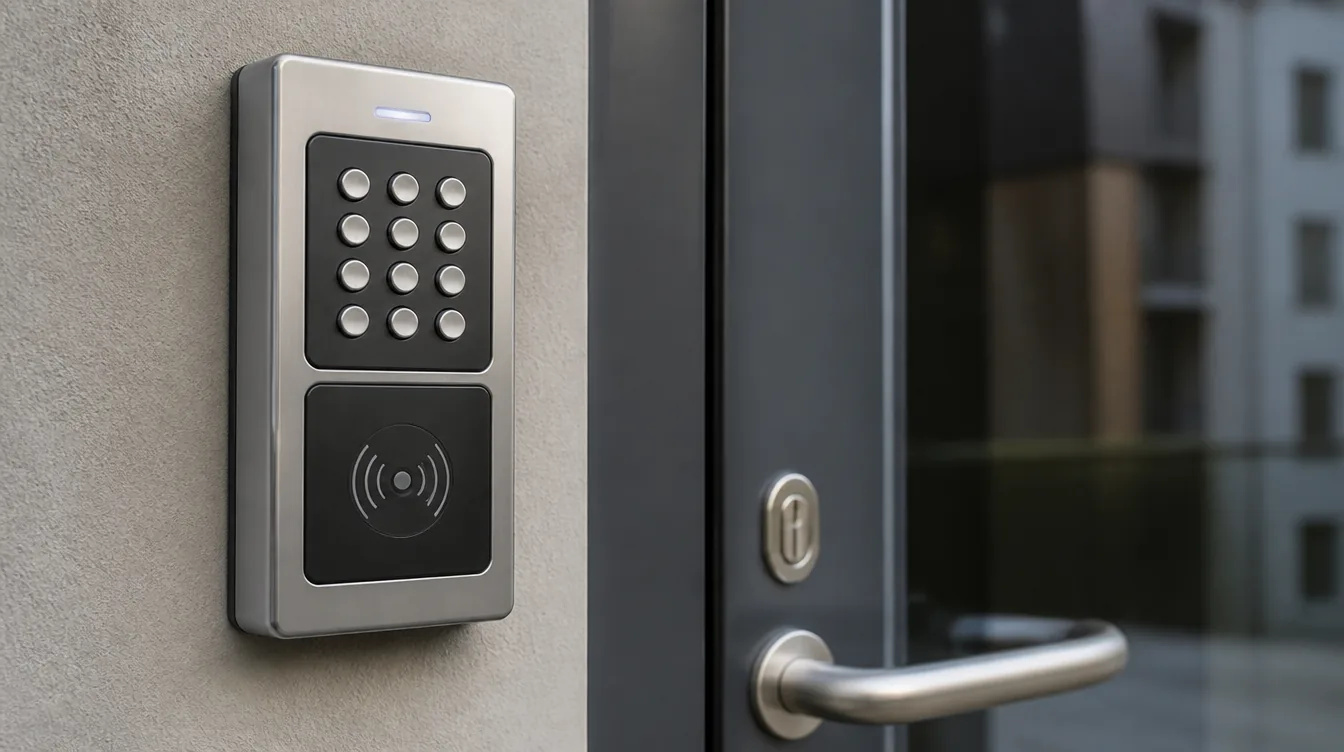
Strong NYC apartment building access control replaces the copied-everywhere brass key with a credential you can issue and revoke on demand. Three options cover almost every building:
- Keypads / coded entry. A code per resident, deleted the day a lease ends. No physical credential to lose on the subway. Best for back doors, package rooms, and smaller walk-ups.
- Key fobs and cards. The workhorse for multi-tenant buildings, tap to enter, and a lost fob is deactivated in seconds instead of triggering a building-wide rekey. Modern encrypted fobs resist the cheap cloning that plagues older proximity cards.
- Smart locks. App-managed entry for unit doors and small buildings, with time-limited codes for cleaners, dog walkers, and contractors.
The question NYC owners always ask is whether this works in a pre-war building. It does. Most systems retrofit onto the door and frame you already have, and the existing buzzer wiring can often be reused, which keeps the job affordable. Our access control installation team maps the building first, entry points, traffic, fire-egress requirements, then specs hardware that fits the doors instead of forcing you to replace them. When a building hasn't tracked its keys in years, pairing the upgrade with a building-wide rekey resets access to a known starting point.
Video Intercoms and Camera-Logged Entry
Controlling the door is half the job; the other half is knowing who came through it. A video intercom answers the question a plain buzzer can't, who is actually standing there? Residents see the visitor before releasing the door, which cuts the casual tailgating that leads straight to a stolen package. Many systems let tenants answer from a phone app, so a delivery doesn't depend on someone being home. Residents dealing with the opposite problem, an apartment intercom that is not working, have reporting rights worth knowing before the door gets propped open again.
For NYC's buzzer-dependent walk-ups, a video intercom retrofit is usually straightforward, the existing riser wiring carries the new panel, and units like Comelit handle everything from a single brownstone to a multi-tenant directory. Add a camera at the entrance and the lobby, and every entry is logged on footage you can hand to police or an insurer after an incident. Our security camera installation work focuses on placement that actually captures faces at the door, not just wide shots of an empty hallway. A tenant adding a camera at their own apartment door has a different set of rules to work through, and we walk those through in apartment security camera laws for tenants.
Package-Theft Countermeasures: Lockers and Mailroom Cameras
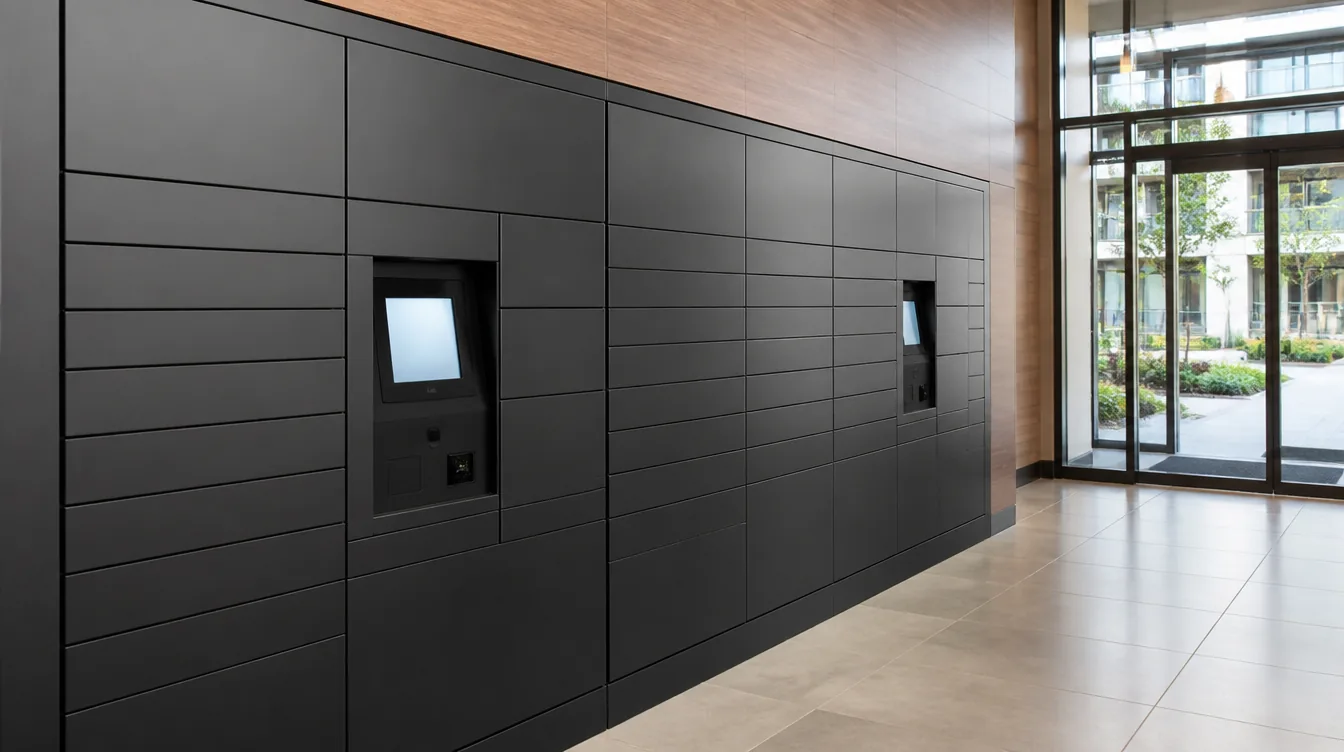
Even a well-secured front door leaves a gap: the moment between a courier dropping a box and a resident picking it up. Two measures close it.
- Package lockers. A bank of smart lockers in the lobby gives every delivery a locked home. The courier scans and drops; the resident gets a code and retrieves it on their schedule. Nothing sits exposed.
- Mailroom and lobby cameras. Where lockers aren't an option, a camera covering the drop zone is the next best thing, it deters grab-and-go theft and gives you footage when something does go missing.
The strongest setup ties these together: a video intercom that screens who enters, access control that records each entry, and a locker or camera covering the boxes. In a building that has fought package theft for years, that combination changes the math for anyone thinking about walking in behind a resident.
What to Do in a Lockout, and When to Rekey
Until every building runs on fobs and codes, lockouts will keep happening, and how you handle them matters. If you're stuck outside:
- Try the free options first, a roommate, the super, or a spare left with a neighbor.
- Skip the credit-card trick and the shoulder charge. A spring latch might pop, but a kicked frame costs far more than a locksmith visit.
- Call a licensed locksmith with your address and the lock type. Most NYC apartment doors open with non-destructive tools, so the lock survives and your key still works afterward.
There's one situation where getting back in isn't enough: a lost key ring. If the keys that locked you out are gone, dropped on the train, stolen, never returned by a former tenant, the door should be rekeyed the same visit. Rekeying changes the pins so old keys stop working, usually without replacing the hardware, and it's the standard move on every lease turnover. If you just took over a unit, here's whether you should rekey your locks after moving into a NYC apartment. Our residential locksmith team handles both the emergency entry and the rekey in one trip, so a bad night doesn't leave your apartment exposed for a week.
Securing Your Building Is a Layered Job
No single product secures an NYC apartment entry. Access control decides who gets in, a video intercom and cameras record it, lockers protect deliveries, and prompt rekeying keeps lost keys from becoming an open door. Top Notch Locksmith & Security designs and installs all of it across the five boroughs, and we're on call 24/7 when a lockout can't wait. Tell us about your building and we'll recommend the layers that fit it.
Frequently Asked Questions
Can access control be added to an old NYC apartment building?
Yes. Most keypad, fob, and video-intercom systems retrofit onto your existing doors and frames, and the current buzzer wiring can often be reused, so a pre-war building rarely needs new entrances to get modern access control.
What's the best way to stop package theft in an apartment lobby?
A combination works best: a video intercom that screens who enters, smart package lockers that keep deliveries locked, and a camera covering the drop zone where lockers aren't possible.
Should I rekey my apartment after losing my keys?
If the lost keys could be in someone else's hands, yes. Rekeying changes the pins so the old keys no longer work, usually without replacing the lock, and it can be done in the same visit as an emergency lockout.
Is a video intercom worth it over a basic buzzer?
For most NYC buildings, yes. Seeing the visitor before releasing the door cuts the tailgating that leads to package theft, and app-enabled models let tenants answer deliveries from anywhere.